Gatte der Embla Explained: From ASK to ASKER Solutions
The intriguing world of Norse mythology often collides with the intellectual challenge of crossword puzzles, creating fascinating clues that delight and sometimes stump even the most seasoned solvers. One such clue that frequently surfaces, demanding both mythological knowledge and an understanding of linguistic variations, is Gatte der Embla. This German phrase translates directly to "Husband of Embla," and its solutions are a perfect example of how historical language, myth, and puzzle design intertwine. While a simple three-letter answer might spring to mind, the path to fully understanding this clue, and indeed its various solutions, is as rich and complex as the myths themselves.
For many, encountering "Gatte der Embla" in a crossword puzzle immediately brings to mind the name Ask. However, as the world of puzzles evolves and historical texts are re-examined, variations like Askr and even Asker have emerged as valid solutions, contingent on the required letter count. This article will delve into the mythological origins of Embla's spouse, explore the linguistic nuances that give rise to these different answers, and provide invaluable tips for deciphering such multi-faceted clues in your next crossword adventure.
Unraveling the Myth: Who is Embla's Gatte?
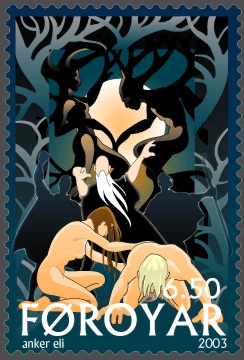
To truly appreciate the crossword clue Gatte der Embla, one must first journey to the misty realms of Norse mythology and understand the significance of Embla and her husband. In the foundational myths of the Norse cosmos, Ask and Embla hold a position of paramount importance: they are considered the first two human beings, the progenitors of all mankind.
Their creation story is both poetic and profound. According to the Poetic Edda, specifically the Völuspá, three mighty gods—often identified as Odin, Hœnir, and Lóðurr (or in other versions, Odin, Vili, and Vé)—were walking along the seashore. There, they discovered two fallen tree trunks, lifeless and lacking in spirit. These trees were transformed into the first humans. From an ash tree, they fashioned Ask (meaning "ash tree" in Old Norse), and from an elm tree, they created Embla (whose meaning is debated but often associated with "elm" or "vine").
The gods then bestowed upon them the gifts necessary for life: Odin gave them breath (ǫnd) and life (óðr), Hœnir gave them sense (lá) and movement (læti), and Lóðurr gave them blood (blóð) and goodly colour (líta goða). Thus, Ask became Gatte der Embla, the first man, embodying strength and rootedness, while Embla, the first woman, represented grace and vitality. Their union laid the foundation for all human life in Midgard, making them figures of immense symbolic power.
The Crossword Conundrum: Why Multiple Answers for Gatte Der Embla?
The existence of multiple correct answers for a single crossword clue, especially for a specific name like Gatte der Embla, can be perplexing. However, it's a common feature in the world of crosswords and often stems from a combination of linguistic variations, historical transliterations, and the puzzle setter's need to accommodate different letter counts. For "Gatte der Embla," the primary solutions are ASK, ASKR, and ASKER, each valid under certain circumstances.
Decoding ASK: The Three-Letter Solution
The most common and arguably the original solution to "Gatte der Embla" is ASK. This three-letter answer is direct, concise, and closely mirrors the Old Norse word for "ash tree" (askr), from which the first man was believed to have been formed. In many standard crosswords, particularly those leaning towards simplicity or brevity, ASK is the go-to answer for Embla's husband. It's the most widely recognized form in modern English contexts that refer to Norse mythology, making it a frequent sight in various puzzle types.
When you encounter "Gatte der Embla" requiring three letters, you can be reasonably confident that ASK is the intended answer. Its simplicity makes it an excellent entry point for new solvers and a reliable staple for veterans.
Exploring ASKR: The Four-Letter Twist
As you delve into more specialized or culturally specific crosswords, you might find the clue Gatte der Embla demanding four letters, leading to the solution ASKR. This variation is a direct transliteration of the Old Norse masculine noun askr, which indeed means "ash tree." In Old Norse, the nominative singular form of the noun would often end in '-r' when referring to a male individual or object. Using ASKR for the first man acknowledges this linguistic authenticity more closely than the anglicized ASK.
Puzzle setters might use ASKR to challenge solvers with a deeper appreciation for historical linguistics or to fit a specific grid pattern. It signifies a subtle but important nod to the original language of the Eddas and sagas, providing a richer, albeit less common, solution for Embla's partner.
Understanding ASKER: The Five-Letter Expansion
Perhaps the most intriguing and least common solution for Gatte der Embla is ASKER, requiring five letters. This form is a rare but acknowledged variant, often appearing in more obscure or particularly challenging crosswords. The 'er' suffix can sometimes imply an agent noun or a more anglicized, perhaps even regional, pronunciation or spelling variation over time. While not as directly rooted in Old Norse grammar as ASKR, ASKER exists as a valid, albeit less frequent, form in some scholarly or popularized retellings of the myths, or simply as a creative device by puzzle constructors to offer diversity.
The presence of ASKER highlights the dynamic nature of language and translation, especially when dealing with ancient texts and names. It serves as a reminder that mythological figures can have multiple spellings depending on the source, region, or era. Discovering ASKER as a solution often requires more advanced lateral thinking and a willingness to explore less obvious possibilities, pushing the boundaries of conventional crossword knowledge. For a deeper dive into these multiple possibilities, check out our guide on Decoding 'Gatte der Embla': Multiple Crossword Solutions.
Master the Grid: Tips for Solving "Gatte Der Embla" and Similar Clues
Navigating clues like Gatte der Embla, which present multiple valid answers based on letter count, requires a strategic approach. Here are some practical tips to help you conquer such mythological challenges and enhance your overall crossword-solving skills:
- Always Check the Letter Count First: This is the golden rule for clues with multiple solutions. The number of boxes dictates which variation of Ask (ASK, ASKR, ASKER) you need.
- Utilize Intersecting Letters: The most reliable way to confirm your answer is through intersecting words. If you have a few letters already filled in from perpendicular clues, they will guide you towards the correct spelling (e.g., if the second letter is 'S' and it's a three-letter word, ASK is a strong candidate).
- Consider the Puzzle's Theme and Difficulty: Easier puzzles typically stick to common spellings (ASK). More challenging or themed puzzles (e.g., focusing on Old Norse or obscure myths) might lean towards ASKR or ASKER. Assess the overall tone of the puzzle.
- Familiarize Yourself with Mythological Figures: Many crossword puzzles draw heavily from mythology. Keeping a mental (or even physical) list of key figures and their common and variant spellings can be incredibly helpful.
- Keep an Eye Out for Variant Spellings: Recognize that historical names often have more than one accepted spelling. This applies not just to Norse mythology but also to Roman, Greek, Egyptian, and other mythologies.
- Don't Be Afraid to Use Resources (Wisely): If you're truly stuck, a quick search for "Gatte der Embla crossword" can reveal common solutions and their letter counts. However, try to solve it on your own first to maximize the mental workout!
- Learn Basic Old Norse Terms: For dedicated solvers, understanding a few common Old Norse words or grammatical structures can provide insight into clues that use more archaic spellings like ASKR.
By employing these strategies, you'll not only solve "Gatte der Embla" with confidence but also build a robust toolkit for tackling a wide array of complex crossword clues.
Beyond the Puzzle: The Enduring Legacy of Ask and Embla
While the focus on Gatte der Embla in crosswords might seem like a niche interest, it subtly underscores the enduring legacy of Norse mythology in contemporary culture. Ask and Embla, as the first humans, represent universal themes of creation, origins, and the human condition. Their story, forged from the elements and imbued with divine gifts, speaks to our own sense of identity and place in the world.
Through media like crossword puzzles, these ancient myths are kept alive, sparking curiosity and encouraging exploration into the rich tapestry of human storytelling. Each time a solver ponders "Gatte der Embla," they engage with a piece of cultural history, whether consciously or not. It's a testament to the power of these narratives that they continue to captivate and challenge us, bridging the gap between ancient sagas and modern-day brain teasers.
Conclusion
The journey to understand Gatte der Embla is more than just finding a three, four, or five-letter word for a crossword puzzle. It's an exploration into the very foundations of Norse mythology, a dive into linguistic history, and an exercise in strategic problem-solving. From the primal creation myth of Ask and Embla—the first humans fashioned from trees—to the nuanced variations of his name (ASK, ASKR, ASKER) demanded by different crossword grids, this clue offers a microcosm of the blend of knowledge and wit required for mastering puzzles. So the next time you encounter "Gatte der Embla," remember the ash and elm, the gods' breath, and the satisfaction of expertly placing the correct letters, connecting ancient lore with modern intellectual sport.